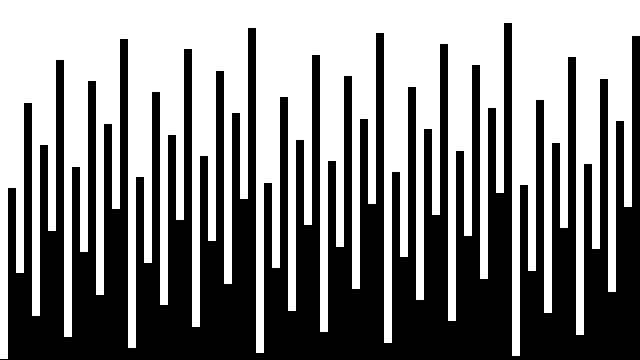
People living comfortably in the first world complain about how hard it is to see so much suffering in the world. They aren't starving. They aren't being bombed. They're watching it on their big TV, while eating delicious pizza in an air-conditioned apartment. They are suffering, but not because of the suffering on the screen.
You're not selfish for suffering.
You don't need to frame your suffering as empathy for people more deserving of empathy than you. That doesn't make you more empathetic and moral. It's not inconsiderate to suffer for yourself because others suffer more.
You're not selfish for being happy.
Lack of sadness isn't lack of caring. If someone thinks happy people are morally suspect, maybe their moral framework sucks. Being happy is good! If you're not allowed to be happy until everyone else is happy, then nobody gets to be happy EVER.
Put on the goddamn oxygen mask!
Being depressed is exhausting, you don't have the energy to fix the world's problems if you're depressed. Accept help even if you think others deserve it more than you. Once you're better, you can help too. We need all the hands we can get.
We tend to focus on not feeling bad, but the goal isn't feeling nothing. The goal is to feel good. Right?
Nothing should be too mundane to make you overjoyed. Imagine a child seeing a grocery store for the first time. Imagine them seeing a gym, which is basically a playground for adults. Hamsters run in their wheel for fun, and we're so bored by running on a treadmill that we have to watch TV. But when you stop and think about it, those things are AWESOME. Yes, awesome, as in, something that inspires awe.
We've collectively stopped looking out the airplane window in amazement. Instead we're annoyed at the crying baby, the most miraculous thing on the plane. Complaining about the bad food, while ignoring the magic of the global supply chain that put it on our tray.
Be the kind of person who shrugs off the bad things and gets genuine, childlike joy from the things everyone else finds mundane. Be the kind of person who gets so excited about the tofu in their fridge not being expired that they text their friend about it. Be the kind of person who thinks the last snow of the winter is as beautiful as the first. Look out the window. Isn't it awesome?
We Have Inkhaven at Home
A friend of mine is going to this big fancy retreat called Inkhaven where you write one blog post a day. And I was like "I can't do that, but I'll sure as hell try!". I don't want to spam this blog, so I'll link my daily posts down here and I'll add the best ones to the main feed later after some polish.
I agree with the vegans. Factory farming is horrific. I don't need another documentary. I'm convinced.
I had chicken last week.
Not because I watched it get its beak cut off and felt nothing, but because I was sick with the man flu and I wanted a comforting microwave meal, and butter chicken was all I could find.
Most restaurants have one vegetarian option that only exists so they can say they tried. If you're a normal person who wants to eat with friends, well fuck you, you're eating fries.
I cook a real meal once a day. Sometimes zero. I drink a premade protein shake instead. These shakes are load-bearing to my quality of life. I tried soylent, the only decent vegan meal replacement shake. My gut hates it. It also happens to be more expensive.
Next time someone tells you they could never go vegan, send them a recipe.
Animal welfare organizations should take a cut of their budget and put it into food science. Vegan food needs to compete with "regular" food, not be a niche specialty product. Fix the food and you get the ethics for free.
April 3rd - Dust
Dust
the ground under your feet built from what ceased to be
each grain of sand a graveyard of forgotten stars
your body only borrows what the earth will reclaim
the dust will call you home the ground under a stranger's feet
April 4th - How to Make a Floating Point Math Library, Part I
How to Make a Floating Point Math Library, Part I
You might have seen the fast inverse square root. The one with the magic hex constant 0x5F3759DF and the comment "what the fuck?" from the Quake III source. After reading this series, you'll understand how it works, and how to apply its arcane trickery to compute any transcendental function.
But first: what is a float?
Scientific notation
writes a number as a power of ten, multiplied by a value between 1 and 10 called the
significand (or mantissa). Floats do the same thing in base 2: the
exponent stores ⌊log2(x)⌋, and the mantissa is between 1 and 2.
This calculator lets you flip individual bits and watch the value change. You'll get a feel for how different numbers are represented.
Manipulating Floats with Integer Operations
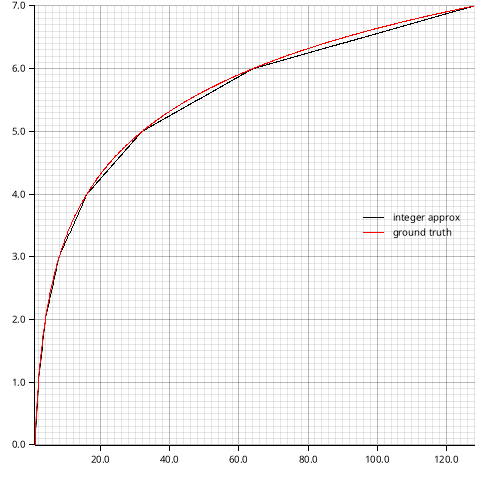
The upper bits of a float are proportional to the logarithm of its value. So integer math on the raw bits becomes log-domain arithmetic on the number itself.
log(a · b)     = log a + log b
log(a / b)     = log a − log b
log(ab)        = b · log a
log(√a)        = log(a) / 2
log(1/a)       = −log(a)
log(1/√a)      = −log(a) / 2
Addition becomes multiplication. Subtraction becomes division. A right-shift by one becomes a square root… Wait… those last two are the inverse square root!
The exponent of a number can be negative (for numbers smaller than 1).
Floats handle this by storing the exponent as exponent + 127. The "magic" constant
0x5F3759DF is just 2127/2. The integer subtract combines the
reciprocal and the multiplication by 2127/2. Two birds, one SUB.
In Part II, we'll use this knowledge to implement other transcendental functions in code!
April 5th - Use Your Phone Less by Making It More Fun
Use Your Phone Less by Making It More Fun
Digital minimalism advice is usually about making your phone worse. Add friction. Greyscale the screen. Buy a flip phone.
You don't have to make your phone miserable to use. The terminal goal isn't "use your phone less." The goal is doing the things you actually want to do. You can read books on your phone, text your friends, write, navigate somewhere new. None of that is the problem. When your phone only has those there's no void to fill by scrolling.
Remove Your Browser
Most things you'd use a mobile browser for have an app. Single purpose, no distractions. To look something up, AI chatbots and Wikipedia search are usually better tools.
For the rare case you need a browser, there's Firefox Focus. When you close it, it wipes everything. No start page, no autocomplete, no history. You can only go on websites intentionally. It doesn't keep you logged in either. Every addictive platform requires a login. No login, no slop.
And it Works?
Now when I pick up my phone reflexively to fill time, there's nothing to scroll. I put it down. Or I text a friend, read a book, write a blog post. No willpower. No discomfort. I never regret being on my phone.
April 6th - How to Make a Floating Point Math Library, Part II
How to Make a Floating Point Math Library, Part II
With only what we've learned in part I, you could figure out reciprocals, cube roots, and square roots on your own. So I'll leave those for the end and start with the less obvious exp2 and log2.
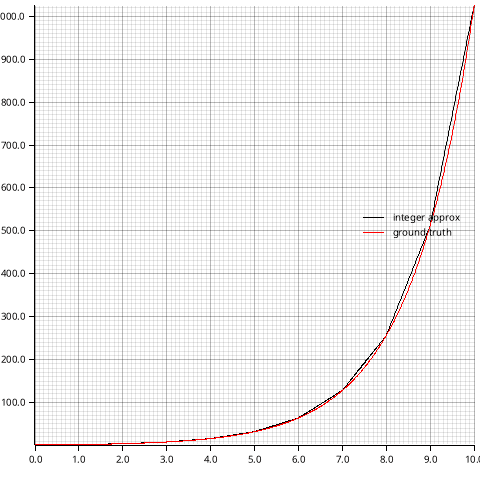
If we could get the mantissa bits into the exponent, we'd get exp2 for free. But how would we actually do that? We want the number 1 to map to the number 2, 2 -> 4, and so on. Let's look at the bit representation.
So we want the first 8 bits of the mantissa to be the input number + 127. For this we need to be at the order of magnitude where changing the 8th mantissa bit moves the value of the float by 1. That order of magnitude is 256. Then we need to add 127, which gets us 383.
Let's try adding 383 to our input and shifting left by 8 bits, making sure to negate the number because we just shifted a bit into the sign of our float.
In Part III, we're learning how to make these crude approximations usably accurate!
April 7th - What I Always Put in my CSS
What I Always Put in my CSS
I like when websites look like websites. Blue links that turn purple after you've clicked them, serif fonts for body text, text that doesn't have a seizure as the page is loading. But I'm not a barbarian. Even I have a few beefs with the default browser styles.
Absolute Unit Line Height
No matter the font size you use for different elements, the line height stays consistent. You don't break the baseline grid unless you explicitly decide to.
html {
  line-height: 23px;
}
Default Border Color
I don't have to manually set the border color on each individual element. I can just set the border width and it gets a default color.
* {
  border: solid 0;
  border-color: inherit;
}
Disabled Dingbats
If I use text as decoration, like decorative bullets or separators. I make sure that selecting and copying the text doesn't include the decorations.
I prefer serif fonts for copy, and I use system-ui for web apps, as one should. But if I want to use a sans-serif font, I never use sans-serif. sans-serif exposes your visitors to the horrors of Helvetica and Arial.
Luckily, most platforms have a font designed specifically to be a good version of Helvetica. Apple devices have Helvetica Neue, Google devices have Roboto, desktop Linux has Noto. Windows has... well, it has Segoe UI, which you get via system-ui.
Prevent <sub> and <sup> from messing with the line height.
sub, sup {
  line-height: 0;
}
Automatically keep aspect ratio when you change the width.
img, video {
  height: unset
}
Flexbox items have min-width:auto, which means items refuse to shrink below their content size. 0 is a much better default.
* {
  min-width: 0;
  min-height: 0;
}
April 8th - Sleepmaxxing
Sleepmaxxing
I used to think that all I needed to maximize my sleep was widely known and on the first page of google, but now I've gotten to the point where obscure and original methods probably contributed to my sleep quality more than the obvious ones.
The Obvious
Sleeping at the same time every night, even weekends, is non-negotiable. Winding down before bed is also important. Not eating before bed also helps (I have my last meal 4 hours before). Exercise makes me sleep a bit better but it isn't load-bearing. Other sleep tips haven't helped me enough to rule out placebo: avoiding blue light, melatonin, white noise.
Blackout Curtains ++
Regular blackout curtains leave a gap and light bounces between the wall and the curtain, leaking light into the room. Dark colored curtains aren't enough, as the light bounce is specular. You want velvet, or Musou Black fabric, if you're fancy. You also want to make a flexible gasket at the bottom of the window frame, again with black felt, unless your curtains go all the way to the floor, that's the key.
Mobility
I've been moving every single joint in my body through its entire range of motion every single day. Just moving them, no holding stretches. Since then, I never feel achy, I'm more flexible, more agile. I can confidently do novel physical things without warming up and I never get hurt doing a weird movement (especially when I sleep). The best thing I ever did for my fitness in general, better than stretching and lifting weights.
The biggest surprise was the effect on sleep! Holy shit! More significant improvement than even the blackout curtains. It takes about 10 minutes, and since doing it daily, I spend 30 minutes less in bed from sleeping better. It's free! This bit deserves its own dedicated article which I will post soon.
Less Could Be More
Oversleeping is a real thing. Spending too much time in bed makes you sleep more lightly and gives you insomnia because you don't have enough sleep pressure built up. Poor sleep, even lots of it, can lead to being more tired and feeling even more symptoms of sleep deprivation, convincing you that you need more sleep, and making the problem worse.
This was probably my biggest problem. I was spending 10-12 hours in bed, taking naps, and had horrible insomnia and the WORST sleep. Sleeping less fixed me.
Sounds silly, but try sleeping on a yoga mat or a rug. It'll take a few days to adapt, but you might get better sleep. I know I did, but it's weird enough that I don't trust it'll work on everyone.
Being Slightly Overweight Can be Surprisingly Bad for You
I was only 20 pounds overweight. I didn't even think I was overweight.
I thought I had just lost the genetic lottery and just had acid reflux
and sleep apnea for no reason. Well, turns out losing 20 pounds fixed both.
Piss Management
I learned that drinking too little can also make you pee more. Urine that is too concentrated irritates your bladder. Try drinking more water if you think you have a naturally small bladder, you might not have a small bladder at all. I didn't. You might also just wake up in the middle of the night simply from habit. Just going back to sleep without peeing for a few days might reset you.
I fixed my sleep by sleeping less, on the floor, after drinking more water in order to pee less. If someone told me all this two years ago I would've blocked them. Do not trust me. I am not a doctor.
April 9th - The Laziest Strength Program that Works
The Laziest Strength Program that Works
Most people who don't do strength training think that they don't have the time or energy. Well good news! Being incredibly lazy gets you 80% of the benefits of spending hours in the gym, being sore, and using willpower. With this method, there is no sacrifice, you just get stronger with no downside.
No Friction
Find exercises that require 0 equipment. Not even a clean floor. You want something you can do literally anywhere, including at work. There has to be no excuse not to do them. Everyone has a few seconds of downtime every day.
You want exercises that you can do as someone completely untrained and keep doing as you get very strong with minor changes. The ultimate hack is unilateral exercises. You can assist yourself with the other side of your body and give yourself any level of resistance you need.
Leg & Hip Extension
Pistol squats. Assist yourself with your other leg to make them as easy as you want when you're starting out.
Pushing
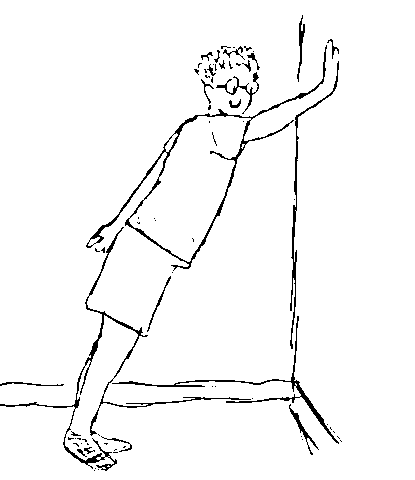
One arm wall pushup. Better than regular pushups because you can do them in public places without putting your hands on the dirty floor. You can progress slowly by helping yourself with the other hand.
Pulling
This one doesn't have a name so I'm calling it the "one-arm wall lat press". Progress by standing further from the wall.
Self-resisted curl: grab your thigh above your knee and curl it. You can control the resistance by flexing your hamstring/glute.
Hamstrings
While sitting, press the backs of your calves into the legs of the chair as hard as you can. That's it. You can do this during a meeting and nobody will ever know. Unless you make weird faces.
Abs
Lie on your back with your legs pointed straight at the ceiling. Raise your hips off the ground by contracting your abs, pushing your feet toward the ceiling. You can do this in bed before sleeping or after waking up. You don't even have to get up. What's lazier than that?
The Program
Do half the exercises one day and half the other day. Just do one set, you'll make progress anyway.
But here's what'll actually happen: you'll want to do more, because you've removed every reason not to. No gym. No time. No willpower. Just get a little stronger every day, for free.
Dithering is the old trick of using patterns to fake more colors than you actually have.
If you've ever noticed the crosshatch pattern in old video games, that's ordered dithering.
It uses a repeating grid called a Bayer Matrix. It's carefully constructed so that adjacent
values are as far apart as possible, which maximally spreads error. Modern game
developers, in their infinite wisdom, have decided that this mathematical perfection is
a problem to be fixed. The regular pattern is too noticeable, they say. Instead they make
a fancy precomputed texture that has the same properties but with no regular pattern: Blue Noise.
Sure, blue noise looks great. But somewhere along the way we forgot why we're dithering in the
first place: to save memory. If you need a texture lookup to do dithering, you're spending
bandwidth to save bandwidth, it makes no sense. Ordered dithering is just 18 instructions
to compute from scratch.
float dither256x256(uvec2 fragCoord){
  uint x = fragCoord.x ^ fragCoord.y;
  uint y = fragCoord.y;
  uint z = x << 16 | y;
  z |= z << 12;
  z &= 0xF0F0F0F0u;
  z |= z >> 6;
  z &= 0x33333333u;
  z |= z << 3;
  z &= 0xaaaaaaaau;
  z  = z >> 9 | z << 6;
  z &= 0x7fffffu;
  return uintBitsToFloat(
    floatBitsToUint(1.) | z
  ) - 1.5; // or -1.0 if you want 0..1
           // instead of -0.5..0.5
}
I came up with this independently around 2016. I found recently that the general idea of
interleaving and reversing bits was first described
here. But I'm
the first person to make this optimized implementation. Which is probably why it hasn't caught on yet.
When you're doing graphics programming, fast dithering should always be in your metaphorical
tool belt. You should never reach for higher bit depth without having first tried
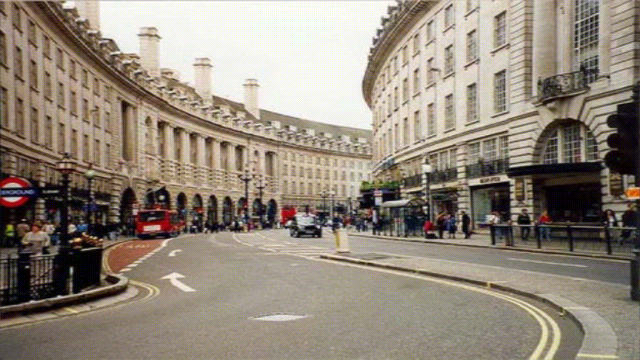
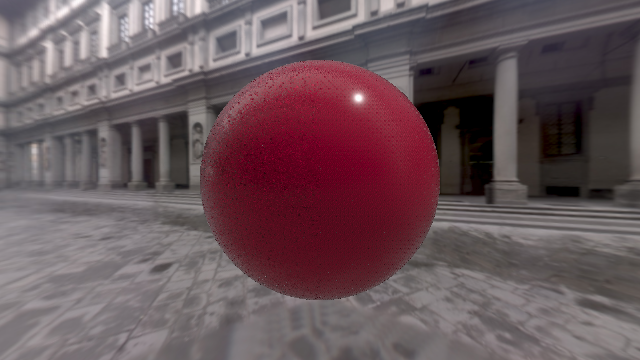
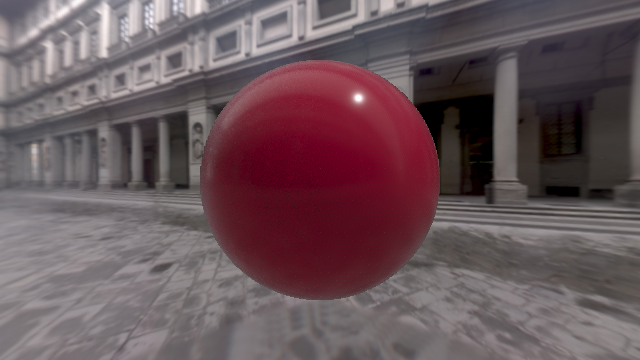
dithering. Here's an example of how even rgb8 is overkill. This is a comparison between
rgb8 and rgb453. Can you tell which one is which?
Now here's without the dithering:
This is how huge the difference is!
You're throwing away half your ram by not dithering all your buffers.
Not Just for Quantization
You can (and should) use Bayer Matrices everywhere you would use random sampling,
like for picking ray directions for lighting.
One sample per pixel Noise on the left, Bayer Matrix on the right
At only one sample per pixel, you can see how the Bayer Matrix grain could
easily be smoothed with a light blur. The noise grain has no chance.
8 samples per pixel Noise on the left, Bayer Matrix on the right
At eight samples per pixel, the Bayer Matrix sampling looks smooth already
while the noise sampling still looks rough.
Blurring white noise just gets you a splotchy mess, which you have to fix
by doing more samples, or a wider blur. Choosing to use white noise is the
dead raccoon in the river that makes everything downstream shit itself.
For temporal effects, you can also use the 1D equivalent of a bayer matrix:
reversing the bits for the index of the current frame, which gives this pattern:
With technological progress, as pixel densities get higher and higher,
dither patterns become harder and harder to see and vram gets more and more
strained. Ordered dithering isn't just the past, it's the future as well!
April 11th - Miscellaneous Quick Thoughts
Miscellaneous Quick Thoughts
Dailies
Being able to do something every day is mandatory for so many things to work: exercise, vitamins, brushing your teeth, learning a skill. Without a checklist, new habits don't happen. You do them for three days, forget on the fourth, and never come back. It's not a willpower issue. It's a systems issue.
A checklist turns intention into something real. There's an empty box. You check it. Make it really real. Apps don't stare you down all day. Put a piece of paper on your wall.
Self-Throttling Snacks for Pareto Optimal Delight to Weight-Loss Ratio
pretzels: eat too many and they start tasting like dehydration
pineapples: they dissolve your tongue 🥰
jerky: makes your jaw hurt
Running Up the Stairs
I started running up the stairs as fast as possible, every time. I save time by missing the bus less. My cardio is also so much better. Free lunch.
Raid 1 is Underrated
Double the read speed and redundancy?
April 12th - You aren't supposed to finish a todo list
You aren't supposed to finish a todo list
Life is not a problem to be solved, but a reality to be experienced. ― Soren Kierkegaard
You aren't supposed to finish a todo list
Humans like progress. So we get satisfaction from our todo list getting shorter. But this creates a bad incentive: adding a task makes the list longer, which feels like regression. So you stop adding things. And forget them.
Cross off finished items, leaving them visible. Now the number you're optimizing is tasks done, not tasks remaining. Adding tasks becomes an opportunity instead of a burden.
Friendly Problems
Don't hesitate to add trivial tasks. Like taking a walk or making tea. Everything deserves to be on there. You're collecting achievements, the more the better. Finishing easy tasks builds momentum. It turns chores into a fun game.
April 13th - Excuses are Todos
Excuses are Todos
The impediment to action advances action, what stands in the way becomes the way. ― Marcus Aurelius
Excuses are Todos
An excuse is a todo item with a bad attitude.
"I'd start a blog but I don't know how to set up a website." Not knowing how to set up a website isn't an immutable fact about the universe. That's a thing you can fix by learning how to set up a website. That's a todo. "I'd eat better but I don't know how to cook." Same thing. The excuse contains the solution. Todo.
Now the meta-reason why you don't learn HTML and cooking is probably that you don't have the time or energy right now. That's the beauty of a todo: when you catch yourself saying "I can't because X", you write down "fix X". You have no obligation to fix X. It's just there in case you're bored or motivated one day in the future.
Can't fix X because of Y? That's just another todo. Can't fix Y because of Z? Write that down too. You've turned moaning into a step-by-step plan.
April 14th - Flicker
Flicker
wearing other people's faces
playing parts we barely know
building walls of politeness
filling gaps with white noise
shallow prayers never answered
arms outstretched but never touching
pressing our palms to the glass
searching for a pulse behind the glow
under the neon rain we stand, mouths open
we mistake the flicker for warmth mistake the warmth for love
April 17th - How to Make a Floating Point Math Library, Part III
How to Make a Floating Point Math Library, Part III
In Parts I and II we built approximations for exp2, log2, sqrt, rsqrt, cbrt, and rcp. They get the order of magnitude right, which is crucial for floating point, but they're off by a few percent, which is useless for most things.
The next few installments are about numerical analysis, a field of math dedicated to approximating transcendental functions with elementary functions (which have CPU instructions). I'm skipping past most of the theory and focusing on software tools that do the math for us.
Numerical Analysis Part I: Iterative Refinement
Back to the Quake III reciprocal square root. We're looking at the part after the bit hacking.
float Q_rsqrt( float number )
{
  long i;
  float x2, y;
  const float threehalfs = 1.5F;

  x2 = number * 0.5F;
  y  = number;
  i  = * ( long * ) &y;
  // evil floating point bit level hacking
  i  = 0x5f3759df - ( i >> 1 );
  // what the fuck?
  y  = * ( float * ) &i;
  y  = y * ( threehalfs - ( x2 * y * y ) );
  // 1st iteration
//  y  = y * ( threehalfs - ( x2 * y * y ) );
  // 2nd iteration, this can be removed

  return y;
}
The idea: you have a cheap, bad guess at f(x). You also have a formula that turns that guess into a better one. Apply the formula until the guess is accurate enough.
If you stare at the math, you can kinda tell what it's doing. x2 * y * y is 0.5 * x / sqrt(x) / sqrt(x), and x / sqrt(x) / sqrt(x) == 1. Because we only have a bad approximation of 1/sqrt(x), our 1 is the error between the true value and the approximate value. The rest of the formula scales it, since the error we have is on the square of f(x), not f(x) itself. We can't get the error of f(x) directly without knowing the ground truth, which is what we're trying to compute in the first place, so this is also an approximation. Hence the iterations.
There's a systematic way to derive the iteration formula: Newton's method.
Here (1/f)(x) means 1/f(x), and ′ means the derivative of the function.
You can see it takes the guess and steps in the direction of the derivative until it hits zero.
For y = 1/sqrt(x), the function whose zero we want is 1/((1/y)^2-x), with derivative (2 y)/(x y^2 - 1)^2. Putting it together gives a giant mess that thankfully simplifies to y' = y * ( 3/2 - ( x/2 * y * y ) ), the exact formula from Q_rsqrt.
Newton's method is part of a family called Householder's method, which uses higher-order derivatives (derivatives of derivatives) in the numerator and denominator. Using a second order derivative is also called Halley's method. Higher-order derivatives give a better guess per iteration, so you need fewer, but each iteration costs more. Which one to use depends. Trial and error.
Deriving these by hand is a pain, so let the computer do it using WolframScript, the language behind Wolfram Alpha and Mathematica.
In Part IV we will implement the other function and show error plots.
April 18th - Underrated Movies you should (re)Watch
Underrated Movies you should (re)Watch
Sometimes showing up is what matters most.
Underrated Movies you should (re)Watch
The Matrix Resurrections - Refreshingly hope-punk, especially for something set in one of the most depressing scifi universes. Genuinely my favorite Matrix movie.
Star Wars: The Last Jedi - Ok, I agree with the consensus. Episode V is the best Star Wars movie, but The Last Jedi is my second favorite.
Nimona - Watching this movie changed me. It explores a particular theme (no spoilers) like no other movie does.
Snatch - Fun! Quotable! Badass!
April 19th - How to Make a Floating Point Math Library, Part IV
How to Make a Floating Point Math Library, Part IV
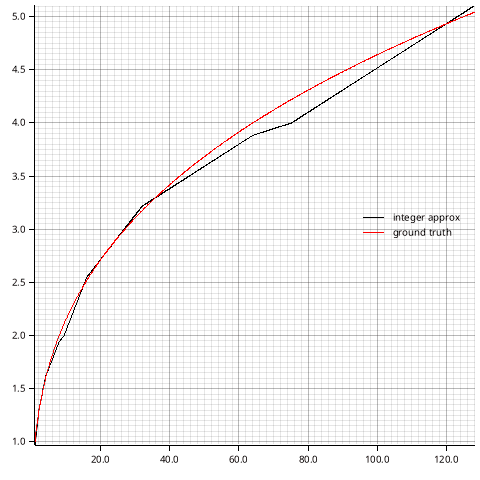
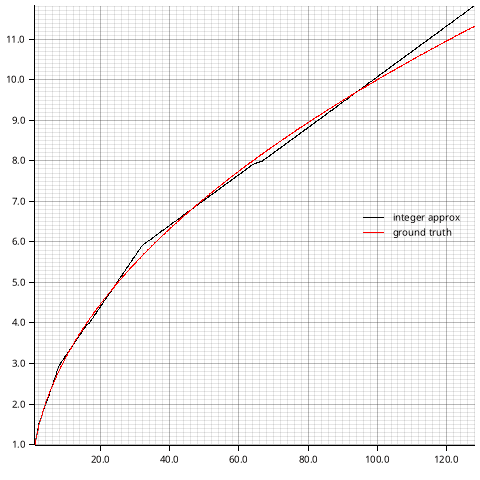
Square roots have a CPU instruction, so let's skip them and go straight to cube roots. Running our wolframscript gives:
And exp2 needs log2. We have a bootstrapping problem. We need a different strategy: approximation theory.
In Part V we'll learn non-iterative approximation methods to implement exponentials and logarithms.
April 20th - Thinking is Expensive, Doing is Cheap
Thinking is Expensive, Doing is Cheap
What's more draining? Doing the thing you don't want to do, or deliberating for hours about whether to keep procrastinating?
When you design systems for yourself (lists, calendars, flowcharts), which bottleneck are you actually relieving?
All my clothes fitting together isn't about resisting bad outfits, it's about not having to pick. Having protein shakes around as a default meal isn't willpower against junk food. It's about not having to decide what to eat.
If you want to reduce a behavior, have a plan. Have a hard rule that you follow by default. No cigarettes unless you get offered one, no dessert on weekdays, no tiktok before 5pm.
Following the plan keeps you in heuristic/execution mode. No thinking, you're just doing. The aversion to doing the thing is real but overriding it doesn't deplete your energy.
Not following the plan puts you in deliberation mode. Is this a legitimate reason to deviate? What will I do instead? Is "instead" better or am I just lying to myself? Will I regret this? And then you have to live with the decision, which means thinking about if it was right, which is more deliberation. You've converted a cheap execution task into an expensive meta-task about whether to execute.
Grindset Considered Harmful
Undisciplined people work harder. They're more exhausted.
They spend their thinking budget on negotiating with themselves and have little left for actual work. The prevailing idea that discipline is "grinding" and "sacrifice" is harmful and just wrong. People who are exhausted assume they can't do it and don't try.
Moral judgements about lack of discipline make the exhaustion even worse through guilt. Replacing Guilt by Nate Soares was one of the most influential books on my life. Without guilt, I can work hard indefinitely. Guilt is so tiring that it was my bottleneck.
Disciplined people don't have some mysterious extra capacity. They just skip the cost of meta-decisions and guilt-processing. A disciplined person runs in heuristic-mode all day and has their thinking budget available for real problems.
Grayshirting
The Mark Zuckerberg gray t-shirt is the tip of a giant grey iceberg, the most visible part of an entire lifestyle.
Grayshirting isn't about sameness. Zuckerberg could hire a stylist. It's about reserving thinking for what matters.
Grayshirt the grayshirtable. Make checklists, calendars and flowcharts for everything. Make routine routine and make the correct thing the easy thing.
Even Planning can be Doing
The common productivity advice of breaking big tasks into smaller chunks isn't just about small tasks feeling less daunting. Decomposition and planning is the hard part, once it's done the execution is often trivial.
The planning can also be systematic. What kind of task is this? What's the standard shape of the solution? What are the typical sub-steps? Hell, just get an AI to do it.
Use your thinking capacity for high level planning. For figuring out what's wrong and for the efficient way to fix it.
The other day I bought a tally counter. I click it when I do what I'm supposed to immediately, instead of deliberating. Despite having the concept of "thinking is hard" in the front of my mind for years, I'm at 24 and it's not even noon. Microdecisions are everywhere.
Start noticing. The more you notice, the more "willpower" just happens. I guarantee you'll be less exhausted too.
It's easy to not notice the impact a habit has, because it becomes your new normal. People go back to bad habits in moments of vulnerability. If you feel like shit, and you do the habit that makes you feel like shit, you won't feel the difference. You'll go back to the old habits without noticing it's hurting you.
So schedule a deliberate day of self destruction. Go back to all your bad habits.
Bad habits aren't addictions. The habit's badness is the whole experience. There's no hit to hook you back in. Stay up till 4am! Skip the gym! Have terrible posture! The crucial part is that you need to do this when you are mentally healthy and feeling great.
The reasons won't be theoretical anymore. You'll know, from your lizard brain to your superego, that you actually do not want to.
April 28th - Hunger is the best spice
Hunger is the best spice
Eating is more enjoyable when you're hungry. It's painful to eat when you're full. This also applies to time.
Having infinite free time makes time have 0 value. For a while last summer I wasted my entire days and got nothing done. Then I returned to school and took on more contract work. I conterintuitively started spending more time on hobbies and started actually shipping. I would do more in two hours than I used to in two days.
Quitting your dayjob to focus on your projects could backfire. Make sure your meal matches your hunger, then you'll taste it.
April 29th - Improve by Giving Up
Improve by Giving Up
Diminishing returns are often only diminishing returns in your current paradigm. There's a breakthrough waiting, but you won't find it by doing the same thing more. Go do something else.
A trick from painting could help you with computer graphics. Beatboxing can teach you something about image compression. The insight doesn't even have to come from the thing itself, just the change of frame. People famously get breakthroughs from walking, meditating, sleeping.
The most influential math people had incredible breadth: John von Neumann, Gauss, Euler. The most prolific living mathematician is Terence Tao and he does everything. Name an influential math discovery that didn't come from cross-pollination.
When you hit a wall, stop pushing. Go around it.
April 30th - Inkhaven Recap
Inkhaven Recap
I'm surprised I succeeded. I didn't take this seriously, and I know when to quit. I got way more out of this than I thought. Writing is easy now. If I have an important idea to share, I can just share it. I don't have to get over the hump of not wanting to do something hard and time consuming.
Insights
The cliché is true: writing helps you think. A post that doesnt ramble forces the idea to be clear.
The clearer the idea, the faster the writing, and the better the post. The thinking is the hardest. The writing does itself.
I always felt like an impostor caling myself a blogger. Yeah, I am a blogger, as much as I'm a programmer.
No amount of good writing can save a bad idea. And vice versa.
I was certain I would run out of things to say. Now I have a longer backlog than when I started. Don't wait for ideas. The ideas come from the doing.
Subjects
Tier List
S
Everything is Awesome
Thinking is Expensive, Doing is Cheap
RLHF but the R Stands for Rat
A
Animal Welfare is a Culinary Problem
Excuses are Todos
Price per Year
How to Signal High Agency Without Doing Anything
In Defense of Directionless Dabbling
Stop Being Brave
Hunger is the best spice
Improve by Giving Up
B
Dust
Use Your Phone Less by Making It More Fun
What I Always Put in my CSS
Sleepmaxxing
Ordered Dithering is Useful and Good
You aren't supposed to finish a todo list
Fire Drill
C
How to Leverage EAs to Fix Bay Area Housing
Floating Point Math Library, Part I
Floating Point Math Library, Part II
The Laziest Strength Program that Works
Flicker
Floating Point Math Library, Part III
Floating Point Math Library, Part IV
Static
D
Miscellaneous Quick Thoughts
Underrated Movies you should (re)Watch
F
Field Notes From the MoreHouse Group House
See You Next Year!
I'm looking forward to doing this again.
Gray
we're different types of gray
mine is jagged concrete yours a calm rainy morning
people always say we match
but gray is just the way colors look when they're all blended together
The Hum of the Refrigerator
The Farmers
Meta makes about $50 per user per year. Google makes about $70. You are not paying for these products, advertisers are. And those advertisers make even MORE money. Big Tech doesn't make the product good for you. They make it good for advertisers, advertisers who've gotten frighteningly good at exploiting your weaknesses.
The Pasture
Some software exists because someone thought it should. Some is optimized to be so delightful you gladly pay for it. Some forums let you talk about what you chose to talk about, not whatever leads to more "engagement". None of these are designed to take from you. They're made to provide.
Escaping the Farm
I didn't realize how much targeted advertising and algorithmically optimized engagement maximization wore me down until I stopped using platforms that do it. It's like noticing the hum of the refrigerator only when it stops.
Now I feel like I decide for myself what I want to do and then I do it. If I fall into an engaging rabbit hole, I'm not following a path designed to extract maximal engagement from me. I'm following my own curiosity. I'm doing something instead of passively observing adversarial input that generates addictive chemicals in my brain. I feel a sense of achievement instead of feeling like I've wasted my time.
At first glance humans aren't very equipped for survival. We have no claws to defend ourselves, no fur to protect us from the cold and the sun. But what we have is one unique trait that allowed us to thrive: imagining the future.
Through predictive modelling, long term planning, and a fair bit of wishful thinking, we didn't just hope a better world was possible, we were able to execute on our plans and mould the world into the shape of our fantasies.
We imagined a world where a mother didn't have to watch her child die of smallpox… and then we made that world real. Our ancestors looked at the sky and imagined touching it. And their grandchildren left footprints on the moon.
Most of our problems are a failure of imagination. If we can only imagine dystopia, how can we plan for utopia? We have a moral duty to use our powers to imagine futures that should exist.
Tonight, on this darkest day, we do what our ancestors did: we gather, we speculate, and we steal warmth from the future. May the worlds we conjure tonight be the ones we build tomorrow.
I don't know the exact risk from artificial superintelligence, and neither does anyone else. But I do know the risk of doing nothing: disease, poverty, war, pollution, worms that burrow into people's eyeballs. Technology fixes things. We don't have time to wait, people are suffering and dying now!
Accelerating isn't reckless, it's the only responsible thing to do.
We're building the wrong things faster than ever. My washing machine has a touch screen, it talks, and it has "AI", and yet I still have to empty the lint trap by hand. People make apps to stop them from using their other apps, apps that track your sleep because your other apps make you too overstimulated to sleep.
That's not progress! The wheel. Writing. Soap. That's real progress.
The point of saving time is to have time. The point of productivity is to produce something. We just have screen time and we just produce value for the shareholders.
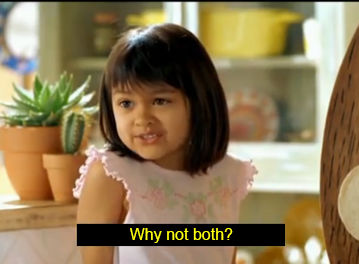
Por que no los dos?
I don’t hate technology. I hate technology that hates me back.
I want tools that accomplish their purpose and then shut the fuck up. I want to do human things, in a world my brain evolved to comprehend. I want robots in the fields so I can tend to my beautiful garden. I want efficient infrastructure so that my life can be inefficient.
Technology can either serve human flourishing or flattens the human spirit. We can use the same hammer to build the future we want, and destroy the future we don't want.
My own behavior baffles me. I find myself doing what I hate, and not doing what I really want to do! ― Saint Paul
The Case for Single-Purpose Devices
The smartphone isn't the ultimate tool. It isn't even a tool. It's all the tools.
You Aren't the Main Character
If you have a book, you read. If you have a camera, you take pictures. If you have a Game Boy, you play a game. If you have all of those crammed into a phone, you don’t do any of that. You scroll TikTok.
When you pick up a book, you’ve already decided to read. When you pick up your phone, you’ve decided nothing. The phone decides for you.
Swiss Army Knives
Smartphones didn’t improve on what came before. They’re worse books, worse game consoles, worse computers, worse music players. Their only advantage is fitting all this mediocrity in your pocket.
Almost everyone owns a kitchen knife, tweezers, a screwdriver. Nobody thinks a Swiss Army knife is an adequate replacement, so why do we all torture ourselves with smartphones?
Smartphones Aren't the Entire Future
Single-purpose devices are making a quiet comeback because they never lost. Every tech product got better and cheaper while you weren't looking: flashlights, digital watches, e-readers, laptops, cameras.
Vinyls and Polaroids aren't just back because of nostalgia.
"Better" technology was missing something important. Vinyl records encourage active listening. Instant cameras don't post to Instagram and ruin your opsec.
Often newer technology is a different trade-off, not an outright improvement.
After 15 years of going full phone. I'm gradually reintroducing the things I thought it killed. I'm buying and borrowing books again. Books are so nice to read compared to a screen, I love them! I've been carrying a paper notepad and a pen again. I love how it allows me to take notes while talking to someone, during classes, or at church without looking rude by pulling out my phone. Paper is freeing. I can draw and highlight and annotate with no friction. It's the better tool for the job.
Whimsy
Looking at your phone is like living in a beige drywall box. It's efficient, it's "modern", but wouldn't you rather live in a picturesque 100-year-old cottage? Isn't reading a book under a tree more romantic than scrolling Twitter while you're sitting on the toilet? Respect yourself! Don't wear the grey jumpsuit! Don't eat the protein cube!
RationalBlack-body
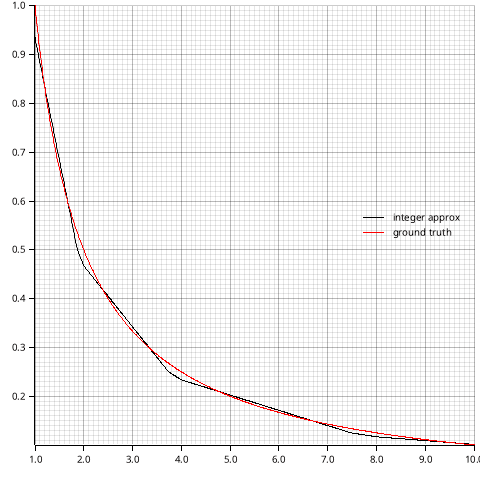
I made this dead-simple rational approximation of the black-body radiation formula.
vec3 blackbody(float t){
    vec3 a = vec3(2.59734600e-07,4.72510121e-07,1.47450666e-07);
    vec3 b = vec3(9.63147451e-04,6.61403216e-04,-2.61032012e-04);
    vec3 c = vec3(8.43099559e+00,-8.07987659e-01,-4.90914001e-02);
    vec3 d = vec3(4.15314246e-07,4.77927333e-07,6.80670967e-08);
    vec3 e = vec3(9.26918288e-04,4.08475977e-04,7.59001852e-05);
    return max(vec3(0), ((a*t+b)*t+c) / ((d*t+e)*t+1.));
}
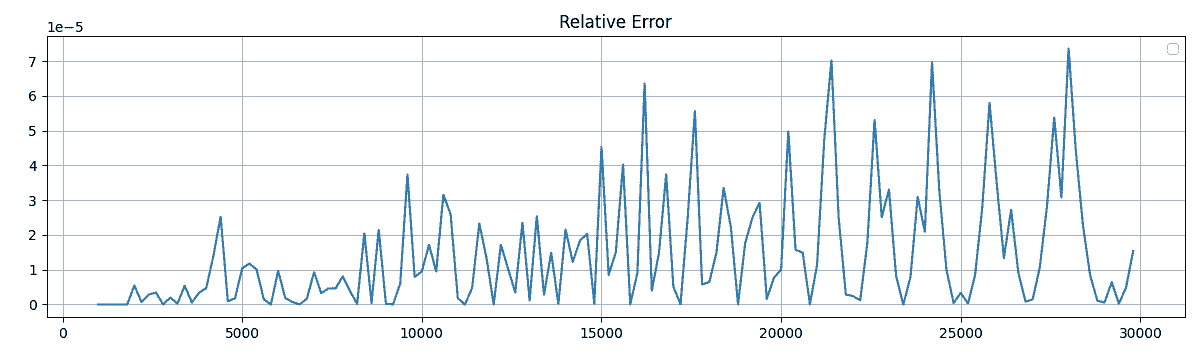
static float decent_sqrt(float x){
    unsigned int b = ftu(x) >> 1;
    float s = utf(0x1fbf8ddb + b);
    float r = utf(0x5eaf6eaf - b);
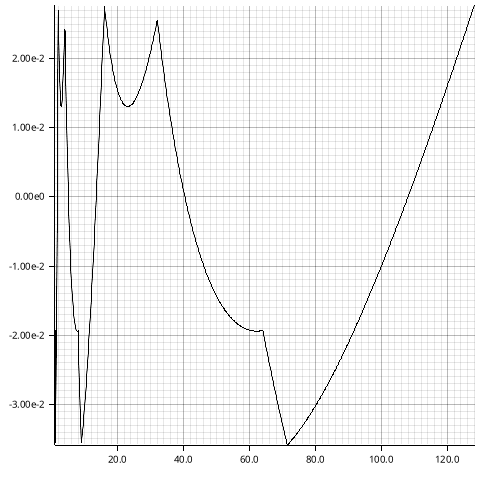
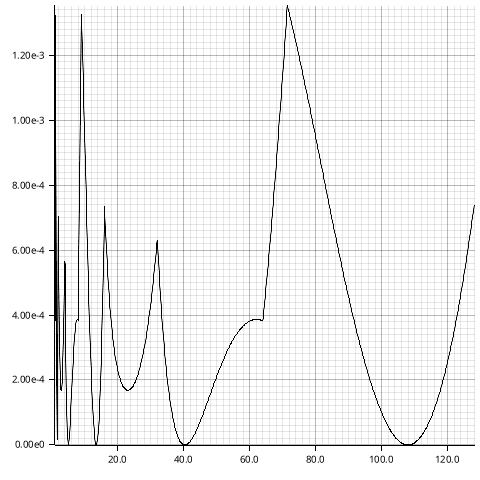
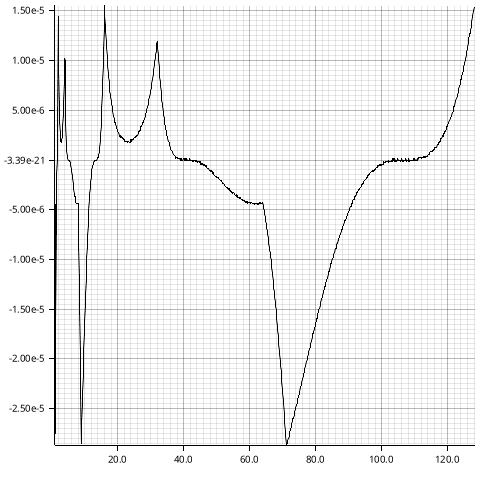
    return fmaf(fmaf(-s, s, x), r, s);
}
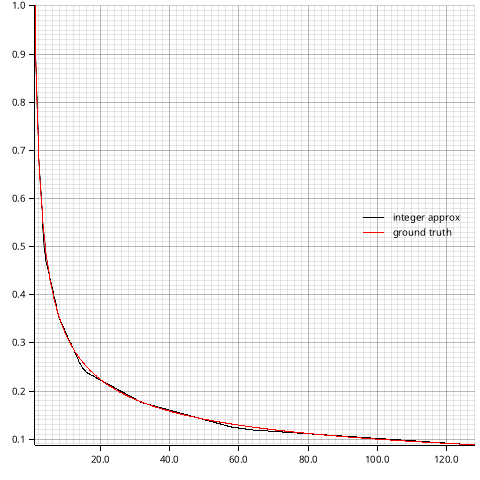
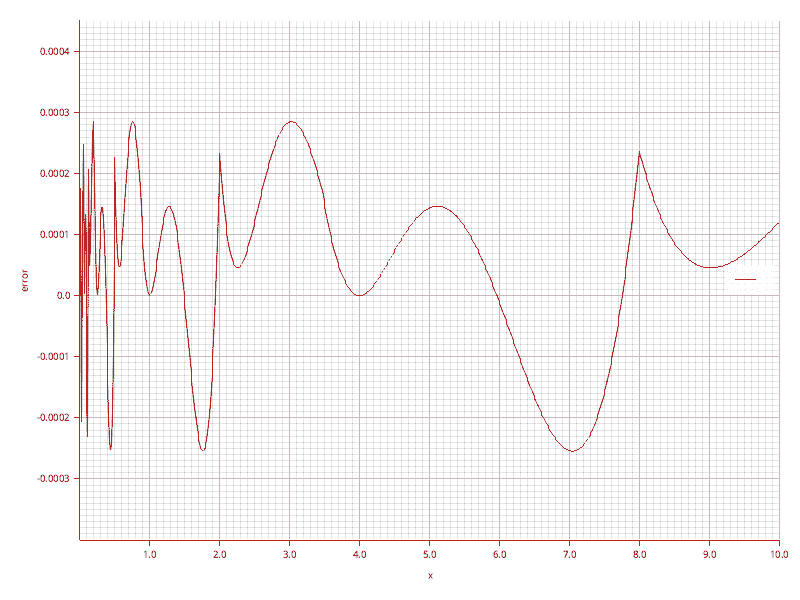
Relative Error Plot
Time isn't real man
There is nothing more deceptive than an obvious fact. ― Arthur Conan Doyle
Anyone who's pulled an all-nighter, been bored, or fallen into a YouTube rabbit hole knows that time is subjective. Brains aren't clocks. They cheat constantly.
Code Monks
Programmers enter multi-hour flow states without fatigue or hunger. Usually helped by autism headphones and chemical stimulants.
Bullet Time
People in life-or-death situations often report time slowing down. The brain temporarily overclocks and hyper-saturates itself with sensory input.
Teleportation
Notice how commuting to your job feels like a time skip? Mundane regular tasks don't exist to us.
Time Travel
When you travel, a few weeks turn into a whole-ass chapter of your life. A giant exotic memory palace. At the end you often feel like you're leaving an entire life behind.
Time Merchants
Video platforms optimize for smoothness and hyperstimulus. They make you forget where videos start and end.
Chronohacking
Time perception is hackable. It's not just for fun, it feels necessary in a world where attention is farmed and sold. There's only so much we can do to have a longer life, so why not make our life denser.
Graphics Optimization is Information Theory
I've been working on an image compression format lately (coming soon!). This led me down the rabbit hole of information theory, and it's made me see graphics programming with a fresh perspective.
Information theory is too often overlooked in the context of graphics optimization. It’s not just adjacent to what we do. It's the whole darn map!
Compute Generates Data
Redundancy can be compressed. This principle applies to compute, not just storage.
Less Data Also Matters
Low-end hardware is usually bottlenecked by memory bandwidth, not compute. Phones and igpu powered laptops also tend to have less vram!
Making data smaller also makes space for something else, like lookup tables or acceleration structures that would be unviable otherwise
Where?
Temporal Redundancy: The current frame is often similar to the previous one. Reprojection, taa, and impostors exploit this to reduce work.
Derived Data: Don’t store what you can calculate. Like normals and positions from depth.
Spatial Redundancy: Adjacent pixels are often the same material and are similarly lit.
Impossible States: If the camera can’t possibly see it. Cull it.
Human Perception has a Limited Bitrate
If there's more of one type of information, you can perceive less of another.
High Frequency, High Contrast Detail: Allows for lower bit depth especially for chroma.
High Motion: Lower resolution is fine.
Low Motion: More temporal redundancy.
More Pixels and More Frames: Temporal tricks and dithering shine at high framerate and resolution.
Blur: Rough reflections and depth of field need more rays or more texture samples, but you can use a lower resolution for raytracing and texture lookups.
Some Quick Tips
One texture + different vertex colors = many looks.
If your floating point data is only positive, put data in the sign bit.
If float data is always < 1, there's a free bit in the exponent.
The least significant bit of a float probably doesn't matter. Yolo.
Float precision issues are often skill issues. Use Herbie and floatfloat methods before giving up and using larger types.
Decouple framerates. Shadows, gi, terrain and entities don't all need to update at the same frequency.
Quantize vertex positions
Paletting
Checkerboarded chroma
Lower lods = fewer animation frames needed
Velocity buffers: 2D and a low bitrate are often enough
Normalized vectors can be stored in 2D
Only impostors facing the camera need to be loaded. (Overpowered)
Learn about sparse bit octrees/contrees
Wake
Your words linger in the silence. Eyes wet, throat dry, I felt the cold wind blow, and I broke like a wave.
In the wake of my deeds, am I the only one? or did you feel the same cold wind as you sailed away?
Fast Approximate |Length| and Squaring²
Shifting a float by 1 approximately squares or square-roots it very quickly. This is probably useful for rms error calculation or getting the length of a vector.
My blog now has an RSS feed! You can find it here.
The script to generate the feed is my first experience trusting ai to write all the code. The recently released Claude 3.7 is pretty good so far. I found out today that GitHub Copilot allows you to use it right in your ide.
Productivity and Happiness are the Same
The idea of work-life balance is harmful.
Work isn't Hard
It's tragic that we accept work is unfun. We shouldn't accept that we're forced to do something that sucks. This framing isn't just bad for you, it makes workers as a group accept terrible working conditions. This shouldn't be considered “normal”.
Fun isn't Easy
Most people's idea of fun is spending money and engaging in vice. People see fun as synonymous with being counter-productive. You're expected to continuously destroy what you build in an endless cycle of consumption that never leads to your life improving.
Work-Life Maximisation
Productivity and happiness aren't opposing forces that need to be balanced. They aren't at odds with each other. Work can be fun, and leisure can be productive. An activity can be more fun and more productive. What you want isn't "balance". You want work-life maximisation.
Story
there's a voicemail full of excuses you haven't listened to yet
I wonder if you miss me like I do if you'll rewind the tape to hear my voice
your scarf still hangs by my door waiting for you to walk in
I watch the snow fall outside my window I trace your name in the condensation
I don't think I feel sad anymore our story ended before it got old
Don't Quit Your Vices
Replace unhealthy sugary treats with fancy salads. Replace social media by hanging out with your friends or texting them. Replace gambling with starting a business. Vices usually fill a void, find out a healthy way of filling it.
Modern Color Utility Classes
Relative colors
and Oklch in css enable this clean, composable pattern.
With one class for the base color and one for the lightness.
You can play around with the code on this codepen.
even the wind limps dragging its hem across the thorns
the clouds weep softly too heavy for the sky to hold
each moment settles like dust remembered but never recalled
here, for a moment or an eternity I can stop doing, and simply be
Stop Having Goals
Humans aren't made to have long-term goals. If you have a goal, don't think about the goal. Stop caring about the goal. Failure to achieve the goal is neutral. Do not let yourself think about it. Not having reached the goal yet should never be on your mind.
Learn to enjoy the process. Want to be strong? Learn to enjoy exercise. Want to lose weight? Learn to enjoy hunger. Want to be rich? Learn to enjoy saving money. Want to make friends? Learn to enjoy being interested in people. Do it without an agenda.
Do the process every day, prioritise it, make it a part of your schedule. Get good at the process.
But…
Ask yourself if the process is still serving you. Maybe you're already past the goal.
Do you really enjoy this or are you addicted?
Things that are pleasurable aren't necessarily addictive, and things that are addictive aren't necessarily pleasurable.
Addiction is a trickster. It makes you rationalize. You need this! You enjoy this! Without those stories, you'd feel guilty and stupid. But addiction isn't pleasurable. Addiction is a cycle of craving (unpleasant), a short hit of meaningless pleasure (optional), followed by a sense of emptiness (also unpleasant).
Many fun things aren't addictive at all. Nobody gets addicted to taking a walk or eating a delicious salad. Meanwhile people get addicted to alcohol, picking their scabs and checking their ex's Instagram.
King of the Hill
shimmering dewdrops jewels in the grass
dawn's vaulted ceiling adorned with golden clouds
this hill, my ornate throne where I am king
The Emotional Cyborg
One limitation of therapy is that you can't have a therapist be with you 24/7 to examine your behavior. Luckily we now have ai that can monitor everything you say, and correct bad thought patterns and behaviours in real time.
Computers turned us into information and math cyborgs, now they allow us to enhance our emotional intelligence.
Furniture Free
I recently got interviewed by Charlotte Collins of Architectural Digest about furniture-free living. Read the article here.
A Programmer Without a Computer
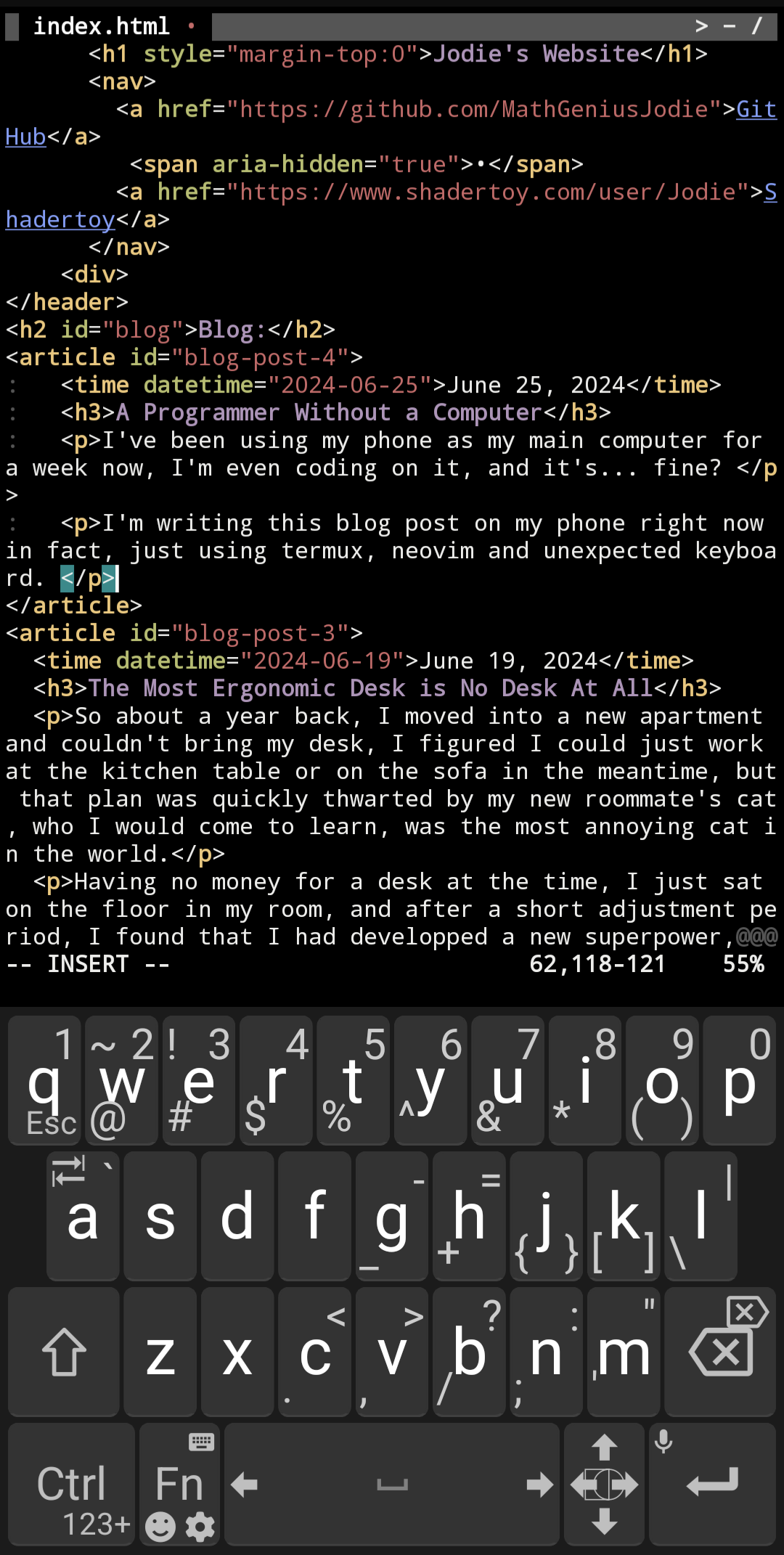
I've been using my phone as my main computer for a week now. I'm even coding on it, and it's… fine?
I'm writing this blog post on my phone right now in fact, using termux, neovim and unexpected keyboard.
I might get a foldable phone and/or a physical keyboard in the future, but I'm not in a rush.
The Most Ergonomic Desk is No Desk At All
About a year back, I moved into a new apartment and couldn't bring my desk. I could work at the kitchen table or on the sofa in the meantime. My plan was quickly thwarted by my new roommate's cat, who I would come to learn, was the most annoying cat in the world.
Having no money for a desk at the time, I sat on the floor in my room, and after a short adjustment period, I found that I had a new superpower. I could sit on the floor with no back support, and it was fine.
After a few months of this, I decided to buy a desk, and I found that I couldn't sit at it for more than a few hours without my back hurting. So I went back to sitting on the floor, and later donated the desk.
I haven't bought any furniture since, and I don't plan to. People didn't have furniture for most of human history, and many people in the third world still don't. This isn't as weird as it sounds.
Get Off Your Phone
Do you feel like you have no time? No energy? Check your screen time in your phone settings. Mine was eight! If you had asked me to estimate, I would have said 2! I had no idea! That's a full-time job!
How I Regained Control
Here's what allowed me to cut my screen time down to 1-2 hours a day:
I started sharing my screen time with my friends every day to keep myself accountable
I removed time wasting apps entirely
I even removed my browser and replaced it with Firefox Focus which doesn't keep you logged in and deletes your tabs when you open it again. No logins, no algorithmic content.
I added the screen time widget to my home screen
Apps like Instagram allow you to make widgets to take you directly to direct messages, or you can use an app like Beeper
Silent notifications! I don't feel like checking the app, but it also doesn't distract me by buzzing
I don't check my phone first thing in the morning, I get up and work
I try to smell the flowers and enjoy being bored
Should I Buy the Thing? A Flowchart
    ┌───────────────┐
    │  Am I happy?  │
    └┬─────────────┬┘
    Yes           No
     │         ┌───┴─────────────┐
     │         │ Will the thing  │
     │         │ make me happy?  │
You don't need └───┬──────────┬──┘
  the thing       Yes        No
 to be happy.      │          │
     │             │          │
 Don't buy      Buy the    Don't buy
 the thing.      thing.    the thing.
Bit Arrays for Fast Graph Search
One common flaw in HNSW implementations is using ordered sets to track visited neighbors. This causes a huge performance overhead.
Using a bit array to keep track of visited neighbors is much faster.
For a code example, see Joann, my HNSW implementation.